
Before You Renovate Your Pool: A Landscape Architect’s Guide
If you’re living with an older pool that no longer meets the needs of your family, you’re not alone. Pool renovation is one of the most common briefs I receive as a residential landscape architect, and one of the most rewarding. When done well, it can add value to your lifestyle (and property!).
But it’s also one of the easiest projects to get wrong. A pool renovation touches almost every layer of your outdoor space: structure, materials, drainage, planting, lighting, and how the whole yard flows together. It’s an investment that needs to be planned to make sure it is cohesive with surroundings and meets your goals.
Here’s what I’d encourage you to think through before you start.
Start with a plan (before you start getting quotes!)
This is the single most important piece of advice I can give.
A homeowner’s first thought might be to go straight to a pool builder or landscaper when they’re thinking about a renovation. But the pool doesn’t exist in isolation. It sits within a garden, next to a house, within a specific set of levels and boundaries.
A pool builder will solve the pool. A landscape architect will solve the whole picture.
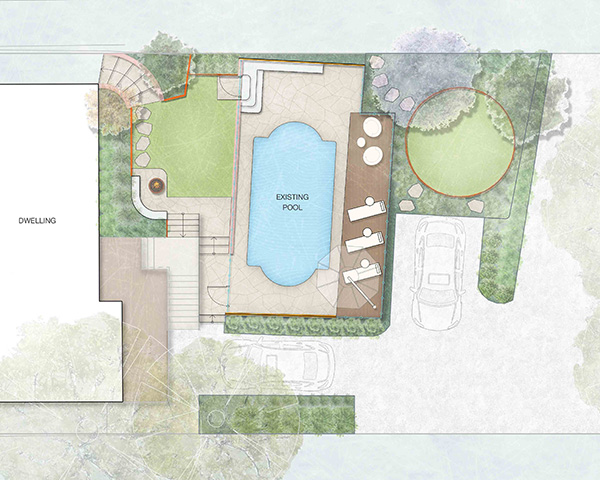
Getting a landscape architect involved early means you have a plan for tradespeople to confidently cost. You’ll know what materials you want, how the surrounding paving and planting should work, what’s staying and what’s going, and what the finished space is actually supposed to look and feel like. Having a plan gives you clarity, saves you money, avoids costly changes mid-build, and means every trade is working toward the same outcome.
A well-planed upgrade can also give you flexibility for the project to be staged. Not everything needs to happen at once, but you can’t stage effectively without knowing where you’re going. For example, you might re-tile the pool and coping first; then re-do the fencing and planting at a later date.
Budget: know what you’re working with, and where to spend it
Pool renovations can range significantly in cost depending on the scope. Resurfacing and retiling an existing pool is very different from reconfiguring its shape, relocating equipment, or rebuilding surrounding structures.
A few things worth factoring in early:
- Pool works – What is involved? Are you hoping to re-shape the pool? Re-tile it? Or can you get away with just a patch-up? Having a plan early gives you clarity when sourcing quotes.
- The surrounding area often costs more than people expect. New coping, paving, drainage, fencing, planting, and lighting add up quickly. It’s important to know where you get the best value in spending in these areas. A considered and cohesive approach is where the renovation really comes to life visually.
- Contingency matters. Older pools can reveal surprises once work begins. This could be a cracked shell, outdated equipment or drainage issues. Build in a buffer.
Rather than asking “how much does a pool renovation cost?”, the more useful question is: “what do I want to achieve, and how can I plan to achieve this?”
Materials: choose for longevity, not just looks
Material selection is where a lot of pool renovations either succeed or fall with disappointment. It’s tempting to chase a trend, but the materials you choose need to effortlessly work with the surroundings.
A few considerations:
Coping and paving – Sets the tone for the whole space. Natural stone, porcelain, and reconstituted stone are all options for consideration. Each comes with a different price point, maintenance requirements and aesthetic outcomes. What matters is choosing something that works with your home’s architecture, not against it.
Pool finish – The interior finish affects the colour of the water, how the pool feels underfoot and how often it needs maintenance. The finish can create a feature, or seamlessly blend in with the rest of your garden.
Screening and fencing – Even with a pool renovation, pool fencing is a requirement for compliance in Australia. There are many options to choose from and it shouldn’t be an afterthought. Vertical batten screens, frameless glass, and powder-coated aluminium all offer very different outcomes and suit different styles of home.
The best material selections feel cohesive where the pool, the surrounding landscape, and the home read as one considered design rather than separate decisions made at different times.
Function: how do you actually use the space?
One of the benefits of renovating a pool, rather than building a new one, is that you probably already know how you use the pool and surrounding spaces. But it’s worth asking: what do you want this pool and the area around it to do?
Some questions worth pondering:
- Is this primarily for swimming laps, or for leisure and entertaining?
- Do you want a defined pool zone, or does the pool need to integrate into a larger entertaining space?
- How does the pool area connect to the rest of the yard, and to the house?
- Do you need additional features: a spa, a bench seat in the water, a beach entry?
- Is there lighting for evening use?
Function also includes the practical elements like the equipment location, access for maintenance, storage, and how the pool interacts with drainage across the rest of the site. Resolving these considerations matter enormously to how the finished space performs.
Approvals: do you need council permission to renovate a pool?
This is one of the most common questions I get asked and the (unsatisfying) answer is – it depends.
In Sydney and New South Wales, like-for-like renovations (resurfacing, retiling, replacing equipment) generally don’t require council approval. But once you start changing the size or shape of the pool, altering the pool fence or its location, adding a spa, or making significant changes to the surrounding structures, you’re likely to be in approval territory.
A few things worth knowing:
Pool fencing is strictly regulated under NSW law. Any changes to fencing, even as part of a broader renovation, need to comply with current Australian Standards, which may be more stringent than what was required when your pool was originally built.
Complying development covers many straightforward renovation scopes and can be approved quickly through a private certifier, without going through full council DA process.
Getting this wrong can create real headaches with delays mid-construction, orders to rectify non-compliant work, or issues when you go to sell. Part of engaging a landscape architect early is having someone who can identify what’s likely to require approval before the project starts, and factor that into your timeline and budget accordingly.
When in doubt, it’s always worth checking before you commit.
Cohesion with your home and architecture
This is the thing that separates a good pool renovation from a great one.
A pool that looks like it was designed for a different house (or a different decade!) is a missed opportunity, no matter how well it’s built. The best pool renovations should work for your lifestyle and feel like they were always meant to be there.
That means looking at:
- The architectural style of your home – A contemporary house with clean lines calls for a different palette than a federation cottage or a mid-century property. Materials, colours, and detailing should respond to what’s already there.
- The existing landscape – What’s staying? What’s being removed? How does the new design sit within the levels and boundaries of the site?
- The interior of your home – If you can see the pool from inside the house, it needs to look considered from that vantage point too.
Cohesion doesn’t mean everything has to match. It means everything has to belong.
Working with a landscape architect
A pool renovation is a landscape project as much as it is a pool project. The best outcomes come from clients who engage a landscape architect to come up with a plan at the start, before anything is locked in.
What that process looks like in practice:
- A site visit and briefing to understand how you live in the space and what you want to achieve
- A concept design that covers the pool zone and the broader landscape, so you can see how it all works together
- A documented design package to take to builders and landscapers for pricing
- Ongoing involvement during construction to make sure the design intent is carried through
If you’re considering a pool renovation in Sydney and want to get it right, I’d encourage you to start with the plan. It’s the best investment you can make before the work begins.
If you’re ready to discuss your project, get in Contact below.