
What Does a Landscape Architect Actually Do?
It’s an evolving, but niche job title and a question I get asked more than you’d think. Sometimes by people who aren’t sure whether they need a landscape architect or a landscaper. Or sometimes by people wondering whether the investment is worth it for their project.
The answer is that what a landscape architect does is more expansive than most people expect. It’s not just design and documentation. It’s thinking through the whole project – the site, the brief, the budget, the approvals, the sequencing, and the coordination. Engaging a landscape architect ensures that by the time construction starts, every decision has been made thoughtfully and every trade knows exactly what they’re building.
Here’s how our process typically works in practice.
Step 1: Understanding the brief
Every project starts with a conversation, usually a site visit where we walk through the space together and talk about how you live in it, what’s working, what isn’t, and what you want the finished space to feel like.
The brief is the foundation of the design. We’ll talk about how you use the space day-to-day, how you entertain, who else uses the garden, the garden’s relationship is with the house, and how it sits in the surrounding environment. We’ll also look at the site’s constraints, the levels, drainage, setbacks, existing structures, and the best approvals pathway for what you’re trying to achieve.
The better the brief, the better the design.
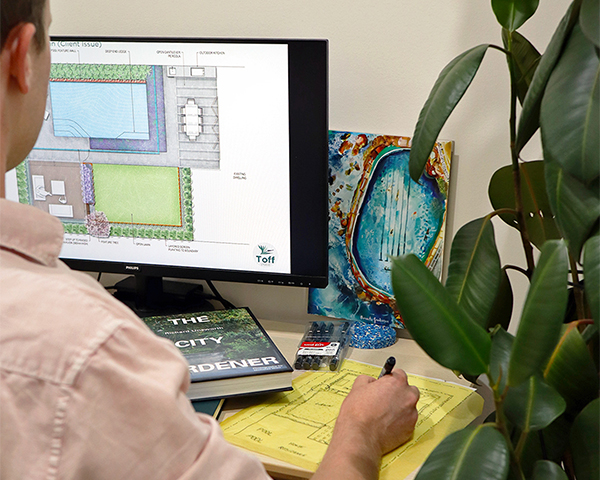
Step 2: Developing the design
With a clear brief in hand, the design process begins. This is where the thinking happens, like working through the spatial layout, resolving levels, testing ideas, and finding the response that balances aesthetics, function and long-term use.
For most projects, this starts with a concept plan – a clear layout showing how the space works, how it connects to the home, and an indicative material direction. It’s enough to give you a real sense of the design and something concrete to respond to, without overcomplicating the process at an early stage.
The goal is a design that feels considered and like it was always meant to be there.
Step 3: Documentation and coordination
Once the design is resolved, it needs to be documented clearly and completely enough that builders can price it accurately, councils can assess it for approval, and trades can construct it without ambiguity.
This is one of the most underappreciated parts of the process, and one of the most valuable. A well-documented design package means:
- Quotes from multiple builders are comparable, because everyone is pricing the same thing
- The approvals process is smoother, because the documentation is prepared with compliance in mind
- There are fewer variations and surprises during construction, because the decisions were made at the design stage rather than on site
Documentation typically includes site plans, landscape plans, sections and elevations, material and planting schedules, and any drawings required for council or certifier submission.
Step 4: Support through delivery
A landscape architect’s role doesn’t stop once construction starts. A landscape architect can remain involved through the build, often scheduling inspections points to ensure the build reflects the design intent.
How much involvement makes sense varies by project. Some clients want regular site visits throughout construction; others just need occasional check-ins at key milestones. Either way, having someone across the design available during delivery is one of the most effective ways to ensure the finished result matches what was planned.
The outcome
A landscape that feels considered, cohesive, and perfectly integrated with the home. More importantly – the result of a process that was clear, well-managed, and free of the costly surprises that come from starting without a plan.
A landscape architect will make sure the whole project is thought through from the start.
Do I need a landscape architect or a landscaper?
It’s a common question, and the short answer is: ideally both, but in the right order.
A landscape architect designs, documents, and coordinates; and then the landscaper constructs from that design. Engaging a landscaper without a design means decisions get made on the fly, quotes are harder to compare, and the finished result is more likely to feel like a series of individual decisions than a cohesive space.
For straightforward projects with a limited scope, a good landscaper working from a basic brief can absolutely deliver a strong result. But for anything with complexity, like significant level changes, a pool, a major renovation, a home renovation , or a high-end finish; a landscape architect adds clarity, reduces risk, and more often than not saves money over the course of the project.
What does it cost to engage a landscape architect?
Fees vary depending on the scope and complexity of the project, and the level of involvement required. Most landscape architects charge either a fixed fee for defined scopes (concept design, documentation) or an hourly rate for more open-ended briefs and construction-phase involvement.
The more useful question is what the fee buys you: a clear design direction before money is spent on construction, documentation that produces accurate and comparable quotes, and the confidence that the project has been properly thought through. For most clients, the design fee is one of the better investments in the project.
How do I get started?
The first step is a conversation. Get in touch to arrange a site visit. We’ll talk through your project, your site, and what you’re trying to achieve, and I can give you a clear picture of what the tailored process would look like in your situation.
If you’re ready to discuss your project, get in Contact below.